Decoding Pop Art: Oldenburg, Lichtenstein & The Sixties
When one considers the seismic shifts in art that defined the mid-20th century, few movements stand out with the same vibrant punch as Pop Art. It was a phenomenon that boldly turned its gaze from the introspective abstractions of its predecessors to the bustling, bright, and often brash landscape of everyday life. If you've ever encountered the puzzle clue "Ebbe tra i suoi esponenti Oldenburg e Lichtenstein," you're likely searching for the very answer this article delves into: Pop Art. This revolutionary movement, flourishing in the culturally charged Sixties, brought the imagery of mass culture – from advertisements to comic strips and consumer products – into the hallowed halls of art galleries, challenging perceptions and forever altering the artistic narrative.
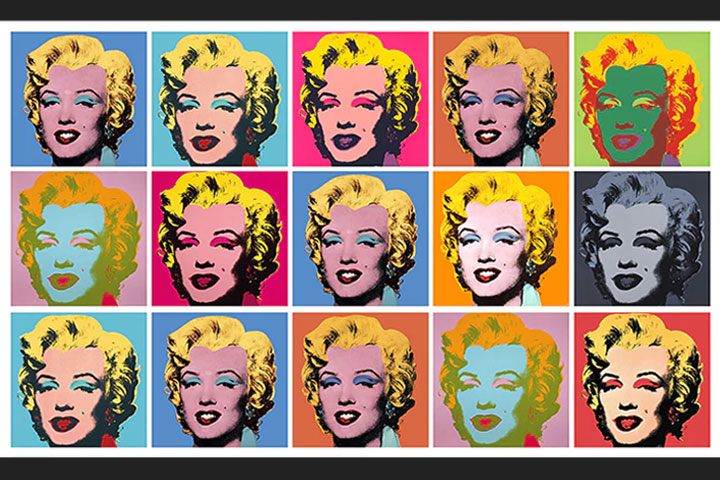
At its heart, Pop Art was a direct reflection of a society grappling with an explosion of media and unprecedented consumerism. It found its voice through artists who dared to appropriate, magnify, and often ironically critique the very objects and images that defined modern life. Among its most iconic figures, Claes Oldenburg and Roy Lichtenstein carved out distinct, unforgettable legacies, embodying the movement's playful subversion and profound impact. Their work, alongside contemporaries like Andy Warhol, didn't just depict popular culture; it *became* popular culture, inviting a wider audience to engage with art in new, accessible ways.
The Dawn of Pop Art: A Cultural Revolution of the Sixties
The 1960s were a period of immense social and cultural transformation. Post-war economic booms fueled a consumer revolution, leading to an abundance of mass-produced goods, widespread advertising, and the pervasive influence of television and print media. Against this backdrop, artists felt a growing disconnect with the dominant art form of the time, Abstract Expressionism, which often prioritized personal emotion and gestural abstraction, far removed from the tangible realities of daily life.
Pop Art emerged as a radical antidote, a deliberate move to bridge the gap between "high art" and "low culture." Artists sought inspiration in the mundane: soup cans, billboards, comic book panels, and even ordinary household appliances. Their methods were equally groundbreaking, often employing techniques borrowed from commercial art, such as screen printing, bold outlines, and stark color palettes. This embrace of popular imagery and commercial techniques was not merely an aesthetic choice; it was a conceptual statement, an interrogation of value, authenticity, and the very definition of art in a media-saturated world. The movement asked: If art is a reflection of life, why ignore the most visible and pervasive elements of modern existence?
Claes Oldenburg: Sculpting the Everyday into the Extraordinary
Claes Oldenburg (1929-2022) was a master of transforming the prosaic into the poetic, the miniature into the monumental. His work stands as a testament to Pop Art's ability to imbue everyday objects with new meaning, often with a playful, yet incisive, sense of irony. Oldenburg's early career saw him creating installations like "The Store," where he sold plaster versions of common consumer items, blurring the lines between art object and commodity.
However, it was his iconic soft sculptures that truly defined his unique contribution. Imagine a giant vinyl hamburger, a drooping canvas telephone, or a floppy fabric toilet. These works subverted the traditional rigidity of sculpture, making solid, functional objects appear vulnerable, humorous, and strangely intimate. By creating colossal versions of ordinary items – like his famous Spoonbridge and Cherry or Clothespin – Oldenburg forced viewers to reconsider their relationship with the commonplace. These sculptures, often crafted from unexpected materials such as canvas, foam rubber, or cloth, celebrated the overlooked while simultaneously questioning the values of a society obsessed with mass production and consumption. His art invited us to look closer, to laugh, and to think deeply about the objects that populate our lives.
Oldenburg’s playful approach to scale and material served as a profound commentary on consumer culture, elevating the trivial to the monumental and challenging the seriousness often associated with fine art. His work is a prime example of how Pop Art transformed consumerism into art icons, making viewers aware of the ubiquitous objects that shape our daily existence.
Roy Lichtenstein: The Comic Strip Elevated to High Art
Roy Lichtenstein (1923-1997) is arguably one of the most recognizable figures of Pop Art, largely due to his distinctive style that borrowed heavily from comic books and advertisements. His work is characterized by bold black outlines, vibrant primary colors, and, most famously, the use of Benday dots – a commercial printing technique that uses small, colored dots to create shading and color variations.
Lichtenstein's process involved taking small panels from comic strips, often depicting dramatic scenes of romance or war, and meticulously re-creating them on a monumental scale. This wasn't mere copying; it was a transformative act. By enlarging these images, isolating them from their narrative context, and applying his signature Benday dot technique, Lichtenstein forced viewers to confront the artificiality and conventions of both commercial art and fine art. Works like Whaam! and Drowning Girl became instant classics, dissecting the visual language of mass media and highlighting its powerful, yet often overlooked, aesthetic qualities.
His art was a commentary on the reproducibility of images in the modern age and the fine line between originality and appropriation. Lichtenstein challenged the notion of artistic genius by demonstrating that even the most mass-produced, seemingly unoriginal imagery could be recontextualized and elevated to the status of high art, prompting viewers to question what truly constitutes artistic value and originality.
Beyond the Canvases: Pop Art's Enduring Legacy and Cultural Resonance
Pop Art, spearheaded by visionaries like Oldenburg and Lichtenstein (and of course, Andy Warhol, whose iconic soup cans and celebrity portraits are synonymous with the movement), didn't just leave an imprint; it redefined the art world. Its impact extended far beyond the gallery, influencing graphic design, fashion, music, and advertising. The movement democratized art, making it more accessible and relatable to a broader audience who could recognize and connect with the imagery being presented.
The irony and commentary woven into Pop Art's fabric remain profoundly relevant today. In an age dominated by social media, viral imagery, and an ever-accelerating consumer culture, the questions Pop Art raised about authenticity, mass production, celebrity, and the commodification of experience are more pertinent than ever. It taught us to look at the ordinary with fresh eyes, to find beauty and meaning in the unexpected, and to critically engage with the visual deluge of modern life. The vibrant, often provocative, spirit of Pop Art continues to inspire contemporary artists, proving its enduring power to challenge, entertain, and provoke thought.
In conclusion, Pop Art, emerging from the energetic crucible of the 1960s, represents a pivotal moment in art history. Its exponents, notably Claes Oldenburg and Roy Lichtenstein, redefined what art could be, drawing inspiration from the very fabric of mass culture and consumerism. Their innovative techniques and ironic lens transformed everyday objects and comic strips into profound statements, leaving an indelible mark on the artistic panorama. So, the next time you encounter the phrase "Ebbe tra i suoi esponenti Oldenburg e Lichtenstein," know that you're pinpointing a movement that not only mirrored its time but continues to resonate with powerful insights into our media-saturated world.